Counter-rotating conical twin screw barrels from 51/105 to 110/220, built for PVC pipe, window profile, foam board, WPC and sheet extrusion lines.
A conical twin screw barrel uses two tapered screws running in a matching conical bore, counter-rotating and intermeshing. The large diameter at the feed end gives strong powder intake; the taper toward the discharge end compresses material progressively and builds pressure efficiently.
This design is the standard for PVC dry-blend processing — pipe, window profile, foam board, WPC and sheet — because it delivers high output with gentle shear and good temperature control for a heat-sensitive resin.
Model range covers 51/105, 55/110, 65/132, 80/156, 92/188 and 110/220, and we also build to your specific machine's geometry.
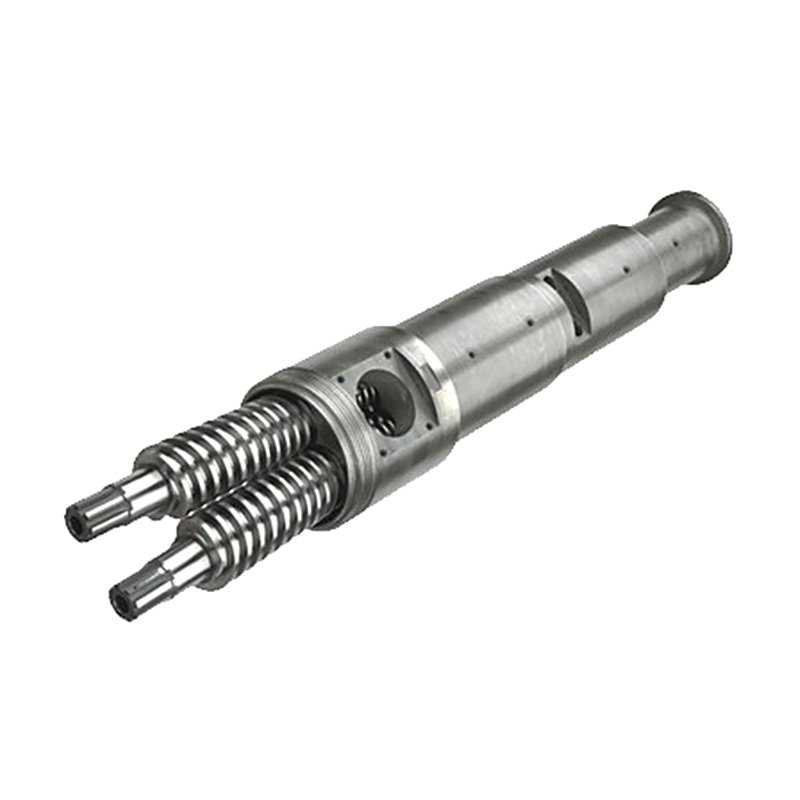
Compact extruders for small pipe, conduit and profile at moderate output.
Common size for medium profile and pipe lines.
Widely used for PVC pipe, profile and foam board production.
Higher output lines for larger pipe diameters and wide profiles.
Heavy-duty extrusion for large pipe, sheet and board.
Large-format lines with high throughput requirements.
Built to your machine model or reverse-engineered from the worn set.
Smaller conical sets for PVC fitting machines.
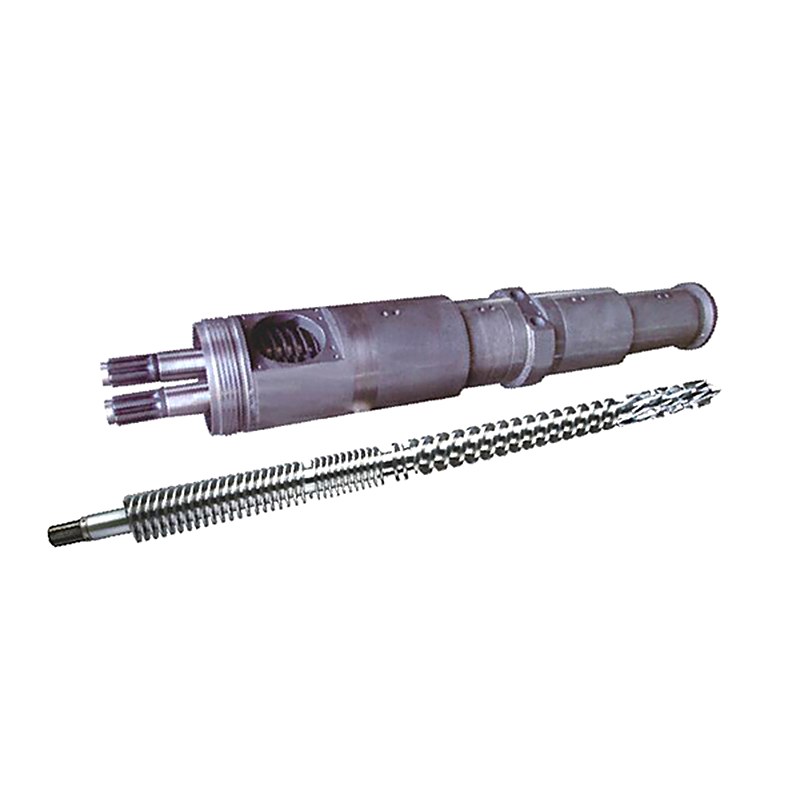
Matched screw and barrel for SJSZ 51/105 conical twin extruders.
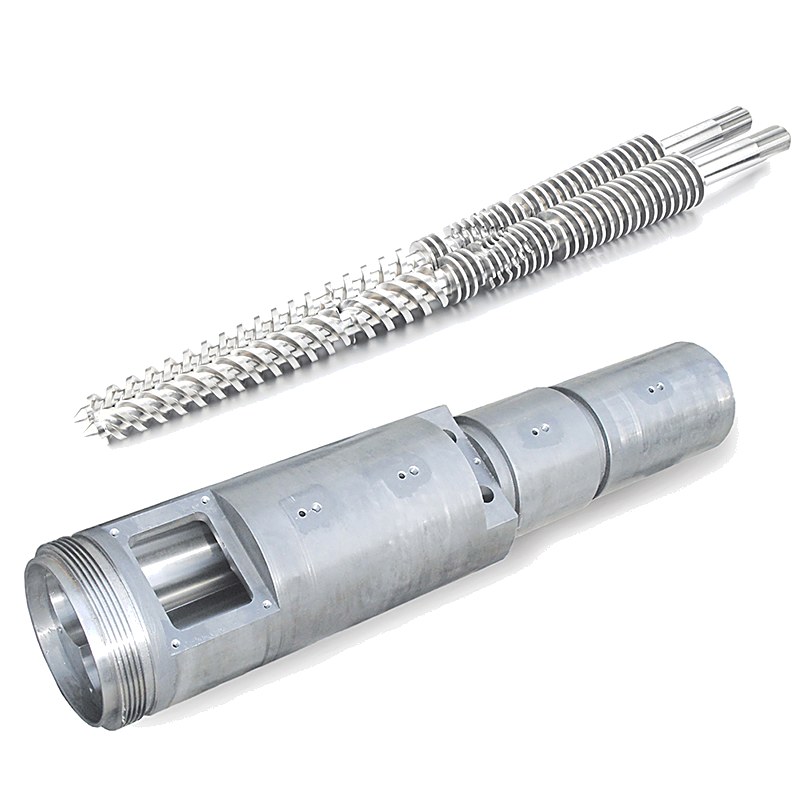
Large-format conical twin set for big-diameter PVC pipe lines.
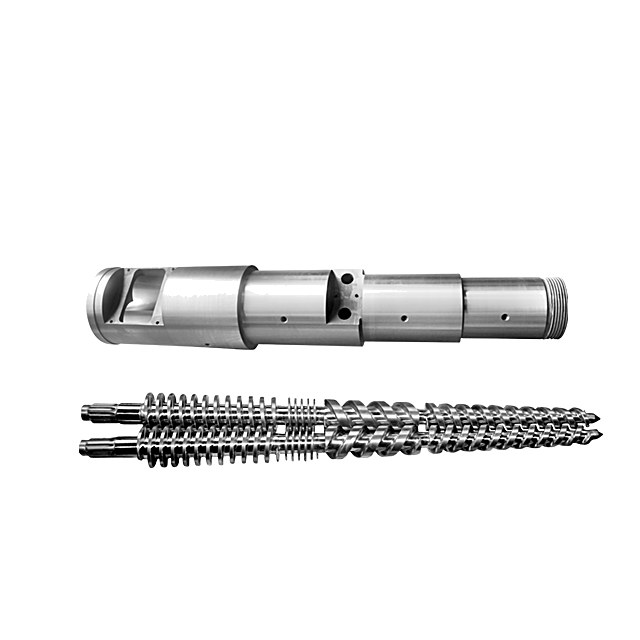
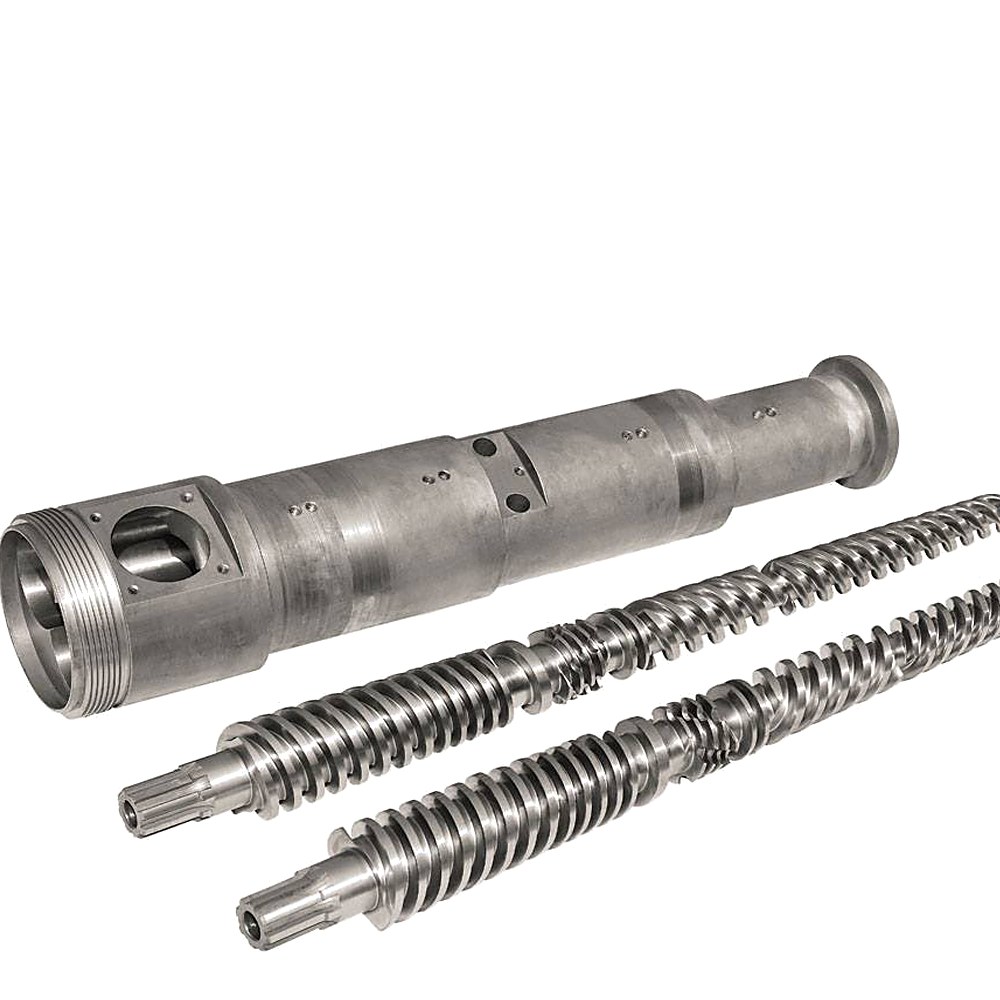
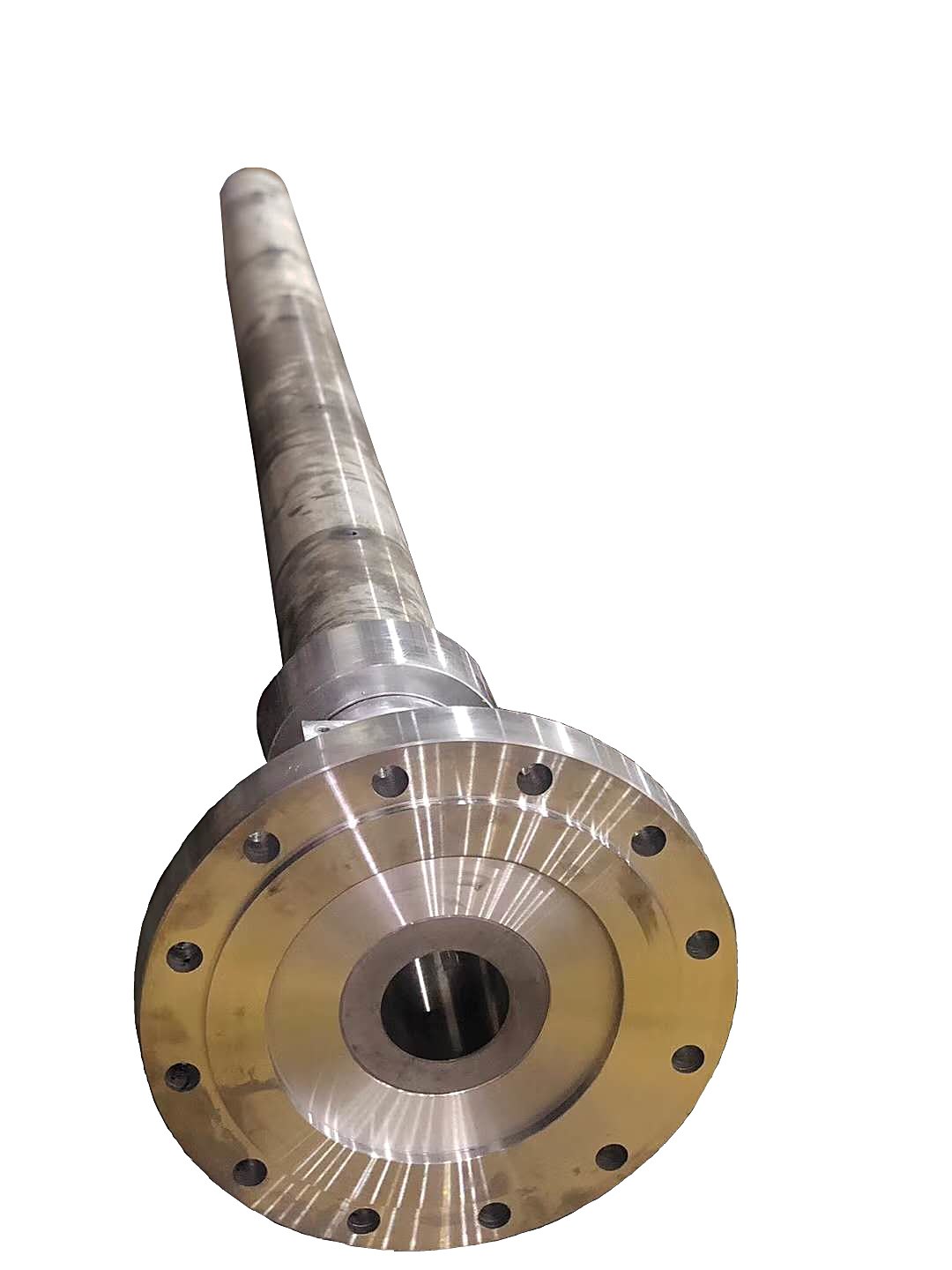
Conical twin screw barrel for uPVC pipe lines, models SJSZ 51/105 to 80/156.
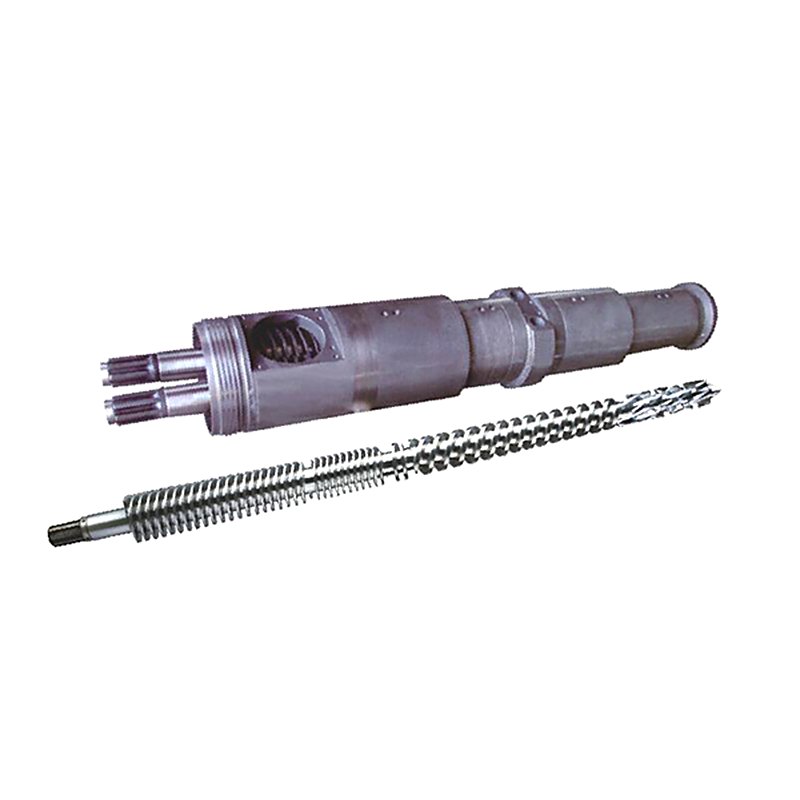
Conical twin screw barrel for window and door profile lines with stable gelation.
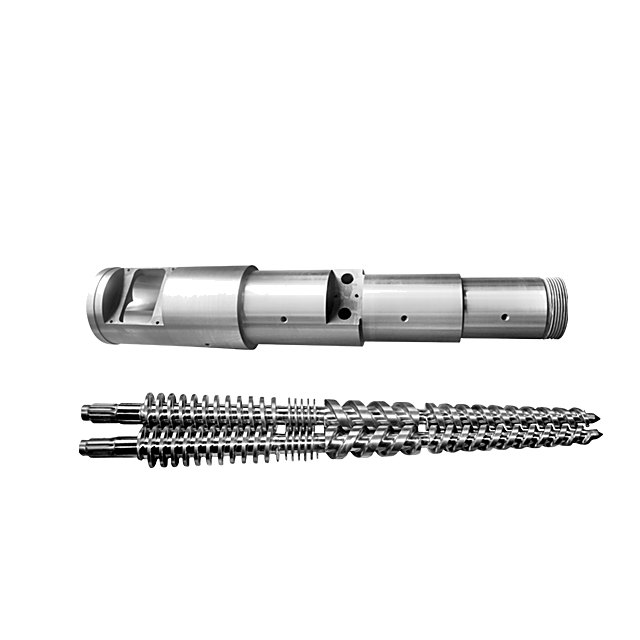
High-output conical twin screw barrel for SPC rigid-core and LVT flooring compound.
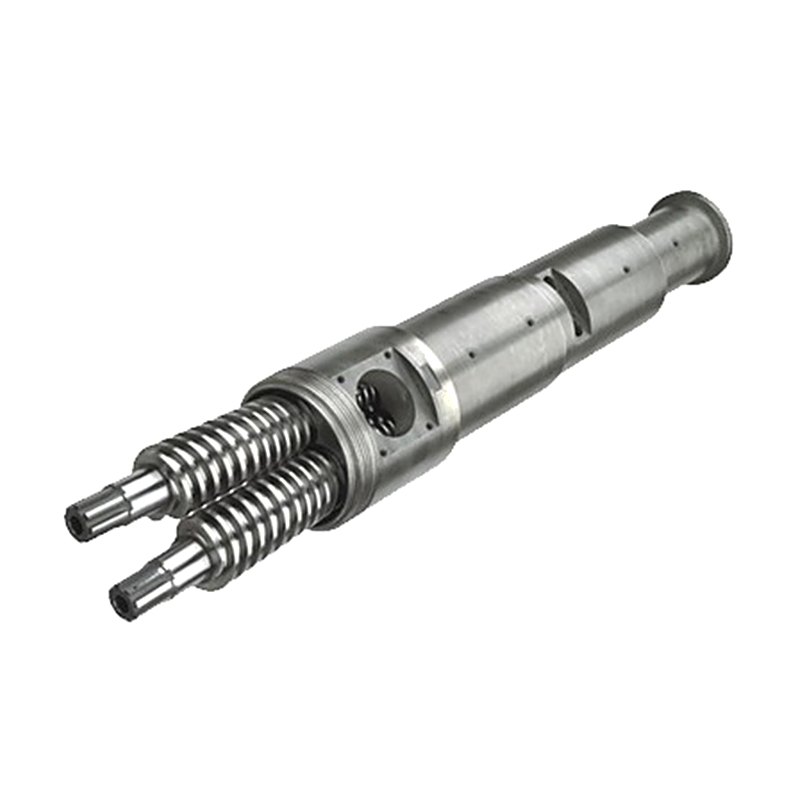
Conical twin screw barrel for free-foam and co-extruded PVC / WPC foam board lines.
New models are added regularly — or send your drawing or worn sample for a custom build.
Standard ranges shown below. Non-standard sizes and custom geometry are built to your drawing or sample.
| Item | Specification |
|---|---|
| Configuration | Counter-rotating intermeshing conical twin screw |
| Model Range | 51/105, 55/110, 65/132, 80/156, 92/188, 110/220 (custom on request) |
| Application Resin | PVC dry blend (UPVC/CPVC), WPC, foam PVC, filled compounds |
| Base Material | 38CrMoAlA, 42CrMo, 304 stainless steel |
| Nitriding Depth | 0.4 – 0.7 mm, surface hardness HV 900–1100 |
| Bimetallic Layer | 2 – 5 mm alloy lining for filled, foamed or recycled PVC |
| Machining Tolerance | ±0.02 mm on critical fits |
| Cooling | Barrel oil or water cooling circuits as specified |
| Feed Section | Conical feed geometry optimised for dry-blend powder intake |
| Lead Time | Confirmed with quotation depending on model and treatment |
| Model | Typical Machine | Typical Output Application | Common Product |
|---|---|---|---|
| 51/105 | Small conical extruder | Low to medium output | Conduit, small profile, fittings |
| 55/110 | Medium conical extruder | Medium output | Profile, small pipe |
| 65/132 | Standard conical extruder | Medium to high output | PVC pipe, window profile, foam board |
| 80/156 | Large conical extruder | High output | Large diameter pipe, wide profile |
| 92/188 | Heavy-duty conical extruder | High output | Large pipe, sheet, board |
| 110/220 | Large-format extruder | Very high output | Large pipe and board production |
Material and treatment are selected by the resin you process, filler content and expected service life.
The standard choice for PVC dry blend — proven balance of wear resistance and cost.
For WPC, high-filler formulations and recycled PVC where abrasion increases sharply.
For CPVC and highly corrosive formulations that attack standard steel.
High-strength shafts for large models running at high torque.
Additional flight protection for filled or foamed PVC.
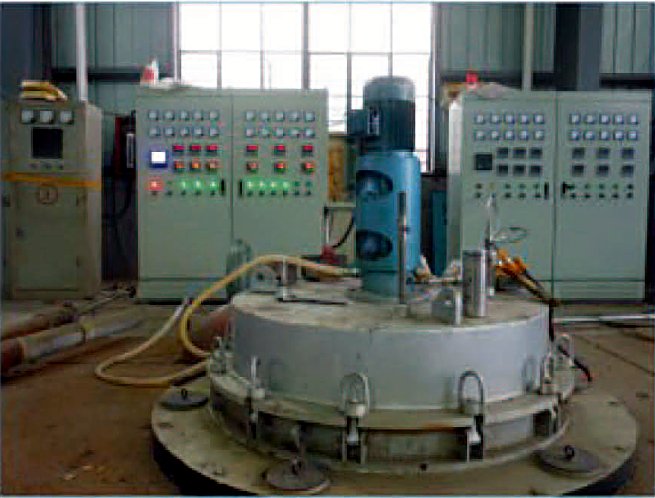
2–5 mm alloy layer centrifugally cast in our own furnaces.
Common problems we help injection and extrusion plants solve — and how a matched screw barrel fixes them.
Worn conical clearance lets material slip back instead of being conveyed forward.
Restored clearance returns output to the line's design level.PVC is heat-sensitive; worn surfaces create dead zones where material degrades.
Correct, smooth geometry eliminates stagnation and decomposition.Pulsing melt delivery makes wall thickness and profile dimensions drift.
Stable conveying and compression give consistent delivery.Degraded material detaches and contaminates the product surface.
Fresh surfaces and correct temperature control remove the source.Wood flour and mineral filler abrade a nitrided bore quickly.
Bimetallic lining extends service life substantially on WPC.High-calcium formulations abrade conical bores fast.
Bimetallic conical barrels with a 2–5 mm alloy layer for rigid PVC lines.Machine model, screw sizes and conical geometry confirmed from your plate, drawing or sample.
Material and treatment chosen according to formulation and filler level.
Conical boring and screw turning with allowance for heat treatment.
Nitriding or bimetallic lining with hardness verification.
Conical thread grinding and bore finishing to final tolerance.
Pair clearance verified, rust-protected, packed in a wooden case.
Water supply pipe, drainage pipe, conduit and irrigation pipe.
UPVC window frame, door panel and auxiliary profile.
PVC foam board, WPC board and cabinet board.
Wood-plastic composite decking, fencing and outdoor profile.
Rigid PVC sheet and panel for fabrication and signage.
Telecom duct, electrical conduit and cable management profile.
Hot-water pipe and industrial piping in corrosive formulations.
Conical twin barrels for rigid stone-plastic composite flooring lines.
Wood-plastic composite profiles and boards with high filler content.
“The 65/132 set fitted without any adjustment. Output is back to what the line was rated for.”
Production ManagerPVC pipe manufacturer, South Asia“We process WPC with a high wood flour load. The bimetallic version has held up much better.”
Technical ManagerWPC decking producer, Europe“Decomposition was costing us scrap every week. The new geometry removed the problem.”
Quality LeadWindow profile extruder, Middle EastThe model plate on your extruder usually shows a pair such as 65/132 — the first number is the larger (feed) diameter, the second the smaller (discharge) diameter. If the plate is missing, send us the dimensions of the worn screws.
Yes. The listed range covers common models, but we also build to your drawing or reverse-engineer from the worn set for less standard geometries.
For standard PVC dry blend, nitrided is generally sufficient and cost-effective. If you run WPC, high filler load or recycled PVC, bimetallic usually pays back several times over in service life.
Falling output, higher melt temperature, unstable dimensions and decomposition symptoms are the usual indicators. Measuring flight clearance gives a direct answer.
It depends on model size, material and treatment. Machining and heat treatment are done in-house, and the schedule is confirmed with the quotation.
Rust-protected and fixed inside a wooden case with clear marking, suitable for sea, air and express shipment.
Send the drawing, machine model or worn sample — we confirm the geometry and quote within one working day.
Tell us the machine model, screw diameter and material you process — we will reply with a matched solution and quotation.
Or write directly to info@xiwangindustry.com · WhatsApp +86-13503734287
We build the common PVC range from 51/105 up to 110/220, including 55/120, 65/132, 80/156 and 92/188. Send the machine plate and we confirm from our records before quoting.
Standard PVC sizes are built regularly enough that we hold material and know the tooling. Because every machine builder's flange and drilling differs, we still confirm dimensions in writing before machining.
Twin barrels usually wear together, but not always. We measure both and either rebuild the pair to restore matched clearance or supply a new matched set, whichever makes engineering and commercial sense.
Tell us your machine model, drawing or worn sample — we reply with a matching proposal and quotation within one business day.