Hot-feed, cold-feed and pin-type rubber screw barrels for rubber extrusion — standard range Ø30–300 mm with L/D 4–20, built for compound, temperature and throughput.
A rubber screw barrel extrudes unvulcanised rubber compound. Unlike thermoplastics, rubber is not melted — it is softened by shear and heat and must be delivered at a controlled temperature low enough to avoid premature scorching, yet consistent enough to hold dimensional stability.
That balance is why rubber extruders use short L/D ratios (typically 4–20) and why the feed form matters: hot-feed machines take warmed strip from a mill, while cold-feed machines take room-temperature strip directly and do all the work in the barrel.
We build hot-feed, cold-feed and pin-type rubber screw barrels, with pin barrels adding rows of pins through the barrel wall to improve mixing and homogenisation of the compound.
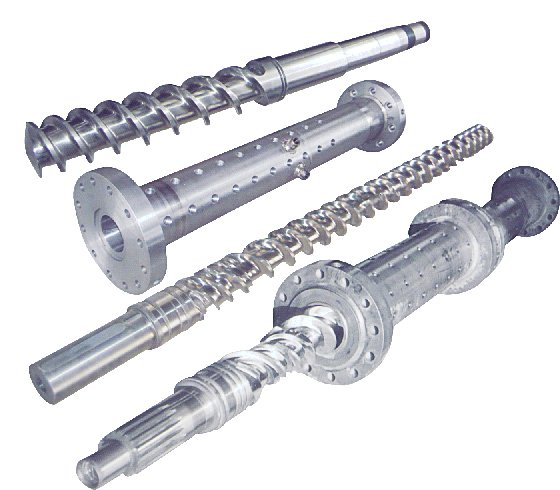
For lines fed with pre-warmed strip from a two-roll mill. Shorter L/D, lower shear.
Takes room-temperature strip directly — the most common modern configuration.
Rows of pins through the barrel wall improve mixing and temperature uniformity.
Degassing for compounds releasing volatiles or trapped air.
For silicone compound with specific temperature and cleanliness requirements.
Geometry matched to compound viscosity and filler system.
Built to your drawing or reverse-engineered from the worn set.
Barrels for hot-feed rubber preforming and calender feed lines.
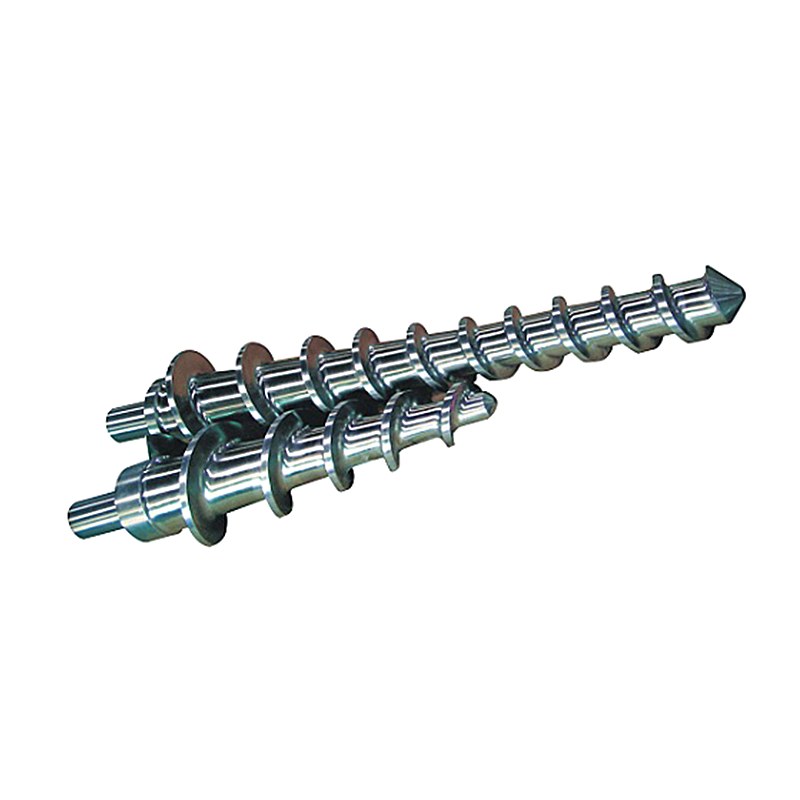
For hot-feed rubber extruders — hose, profiles and cable covering.
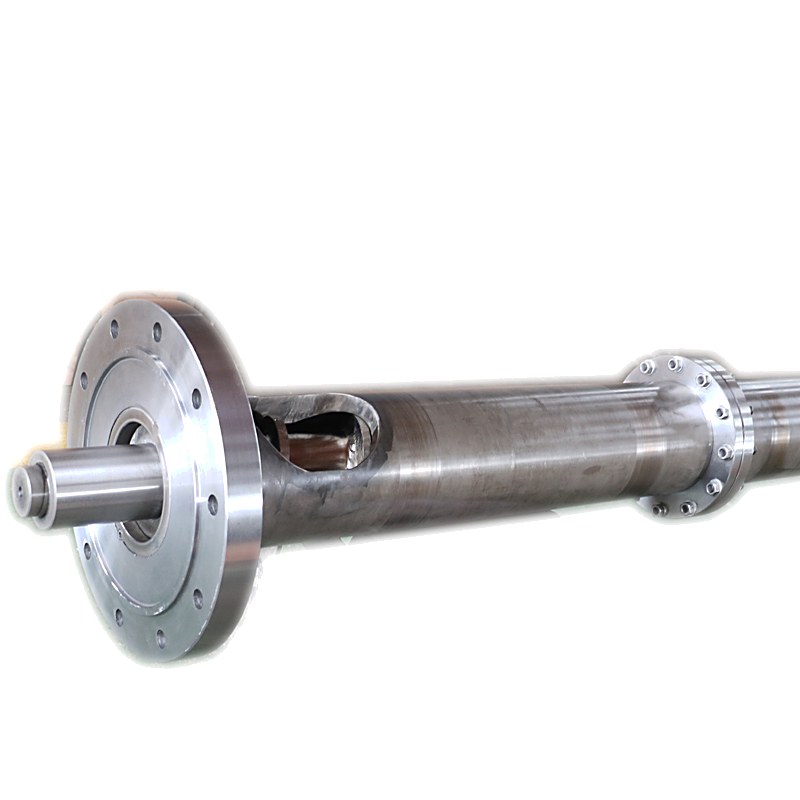
Cold-feed barrel with temperature-control jacket options.
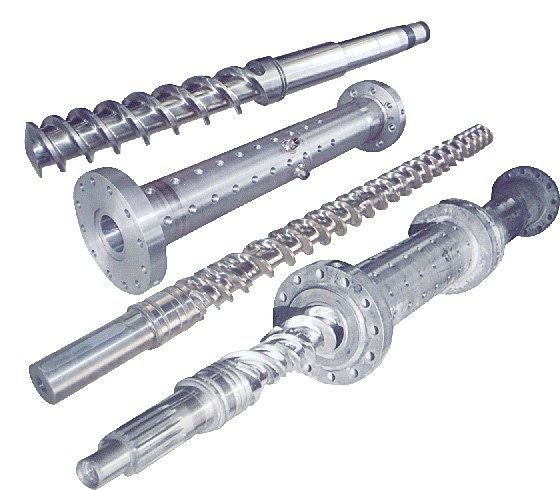
Pin-barrel set for better mixing and lower melt temperature.
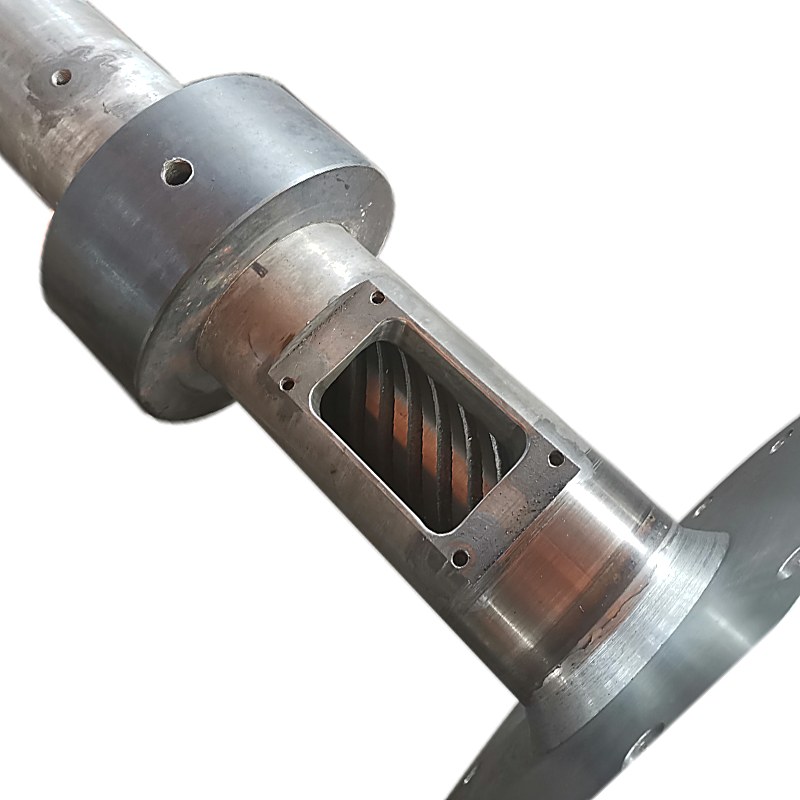
For rubber strainer machines filtering compound before calendering.
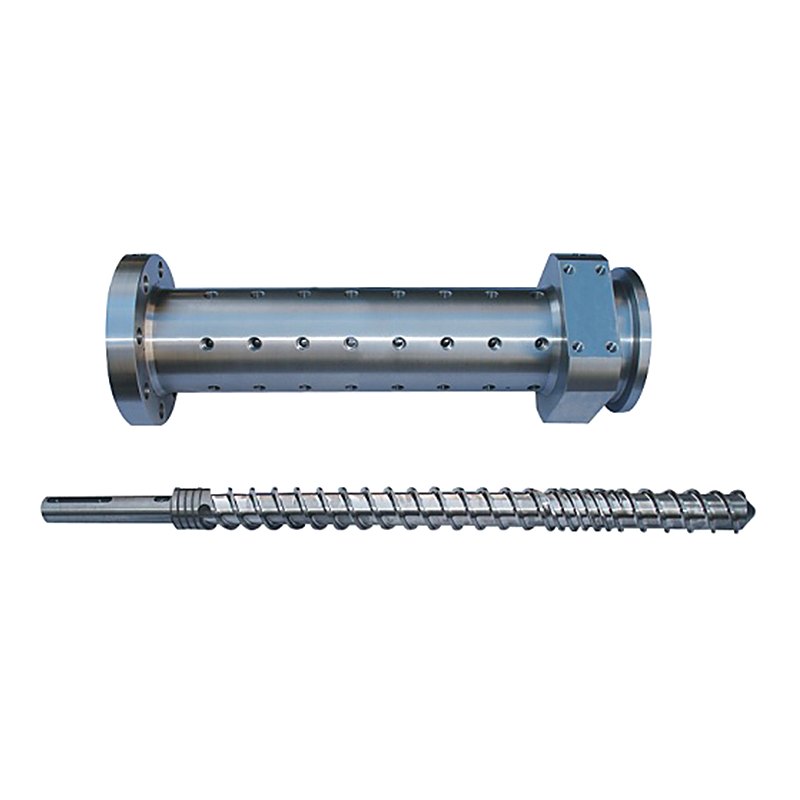
Hot/cold-feed rubber screw barrel for EPDM door, window and automotive seals.
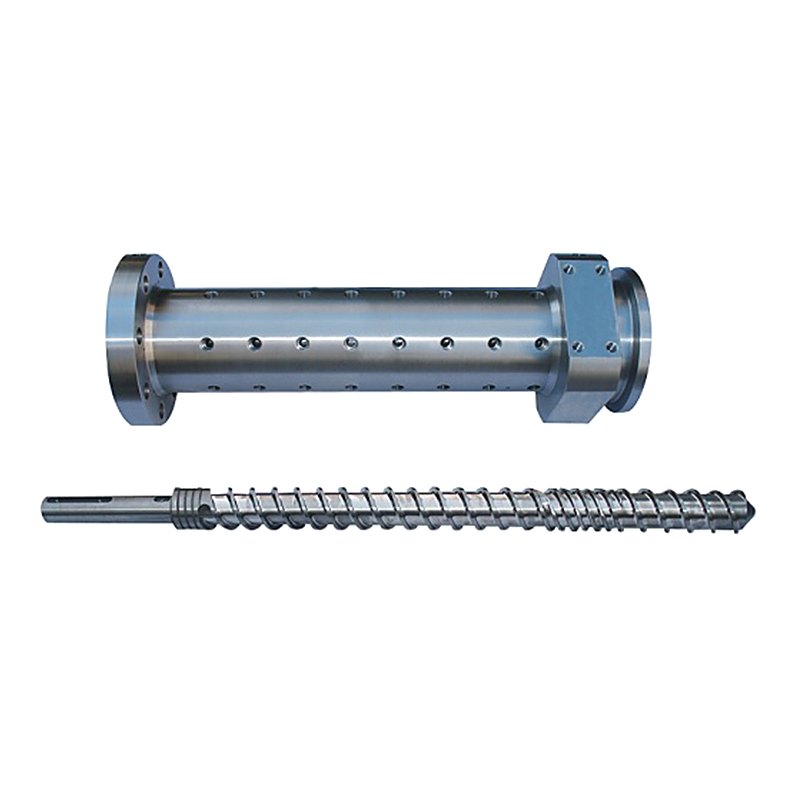
Rubber screw barrel for continuous vulcanisation (CV) and cable jacket lines.
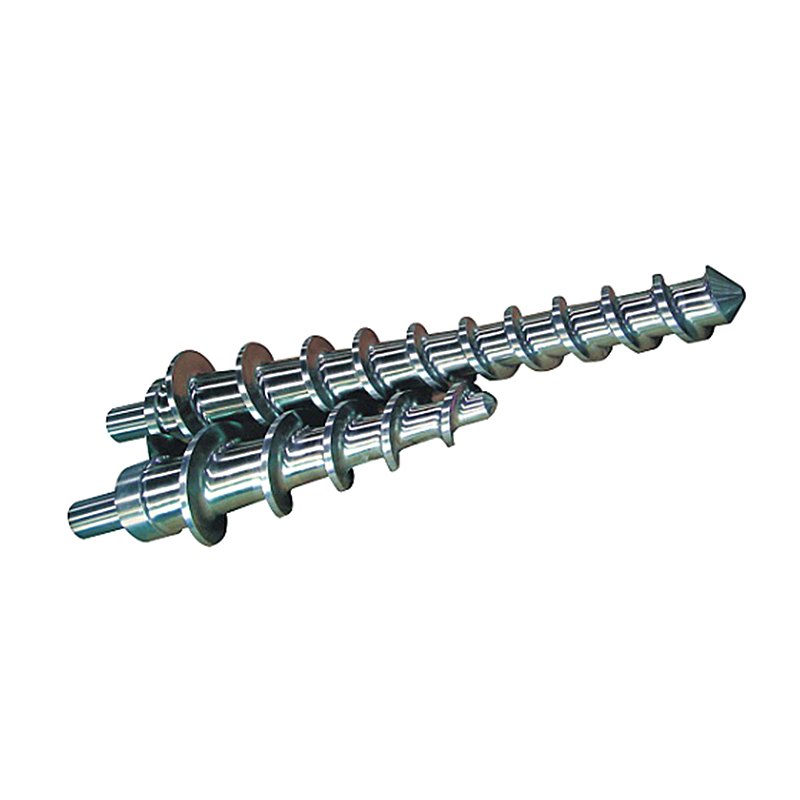
Injection-grade rubber screw barrel with precise shot dosing for molded rubber parts.
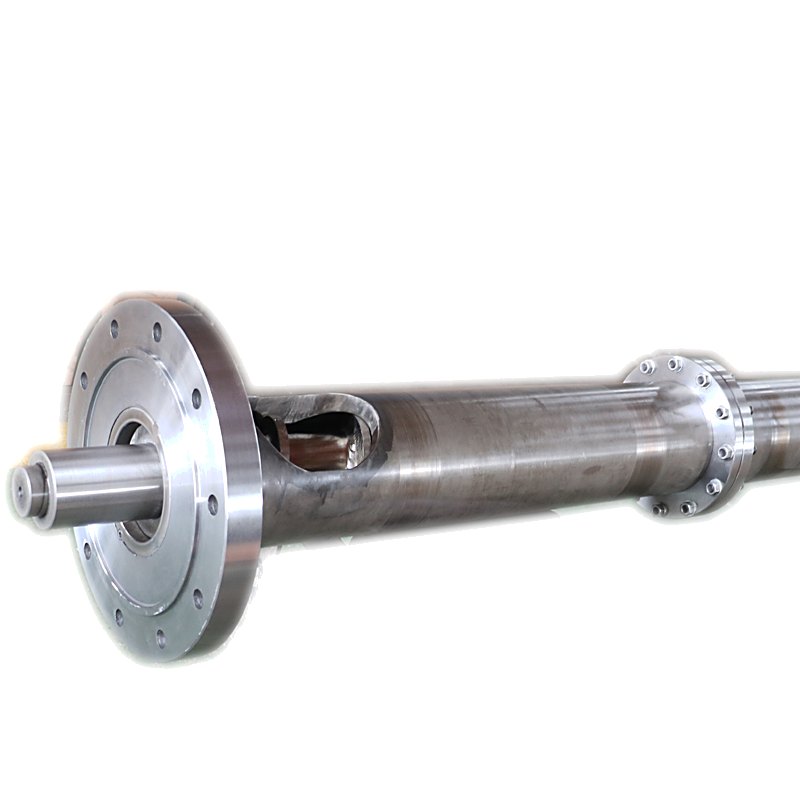
Hot/cold-feed rubber screw barrel for tyre tread, sidewall and preform extrusion.
New models are added regularly — or send your drawing or worn sample for a custom build.
Standard ranges shown below. Non-standard sizes and custom geometry are built to your drawing or sample.
| Item | Specification |
|---|---|
| Screw Diameter | Ø30 – Ø300 mm |
| L/D Ratio | 4 – 20 (short L/D typical for rubber) |
| Feed Type | Hot feed, cold feed, pin type |
| Base Material | 38CrMoAlA, 42CrMo, 40Cr, stainless steel |
| Nitriding Depth | 0.4 – 0.7 mm, surface hardness HV 900–1100 |
| Machining Tolerance | ±0.02 mm on critical fits |
| Temperature Control | Barrel heating / cooling zones configured to your line |
| Pin Configuration | Pin rows and count per your specification |
| Suitable Compounds | Natural rubber, SBR, NBR, EPDM, silicone, butyl, and filled compounds |
| Lead Time | Confirmed with quotation depending on size and type |
| Type | Feed Condition | Typical L/D | Typical Use |
|---|---|---|---|
| Hot-Feed | Warm strip from mill | Short (4–8) | Tyre tread, traditional rubber profile |
| Cold-Feed | Room-temperature strip | Medium (8–16) | Hose, seal, general profile |
| Pin-Type | Room-temperature strip | Medium to long (12–20) | Compounds needing intensive mixing |
| Vented | Either | Medium | Compounds with volatiles or trapped air |
Material and treatment are selected by the resin you process, filler content and expected service life.
Standard for rubber compound — wear-resistant surface with a tough core.
Higher strength for large-diameter cold-feed machines at high torque.
For silicone, food-grade and hygiene-sensitive rubber applications.
Extra abrasion resistance for highly filled rubber compounds.
Corrosion protection and easier release for certain compounds.
Nitrided and ground liners for cold-feed and hot-feed rubber extruders.
Common problems we help injection and extrusion plants solve — and how a matched screw barrel fixes them.
Excess shear or poor temperature control starts premature vulcanisation.
Correct geometry and thermal design keep compound below scorch temperature.Cold and hot spots give inconsistent compound plasticity and output.
Proper shear profile and zone control homogenise compound temperature.Worn clearance or unsuitable geometry limits throughput on cold feed.
Restored clearance and matched geometry raise stable output.Filler and additives are not distributed evenly in the extrudate.
Pin-type configuration improves distributive mixing substantially.Fluctuating delivery pressure makes profile dimensions drift.
Stable conveying holds extrudate dimensions within tolerance.Polished or worn feed sections starve the screw.
Correctly grooved feed sleeves restore positive feeding.Compound type, filler system, feed form and temperature limits define the design.
Hot-feed, cold-feed or pin-type configuration selected with pin layout if required.
Barrel boring and screw turning with heat treatment allowance.
Nitriding or alternative surface treatment per material selection.
Grinding to final tolerance, with pin holes machined if specified.
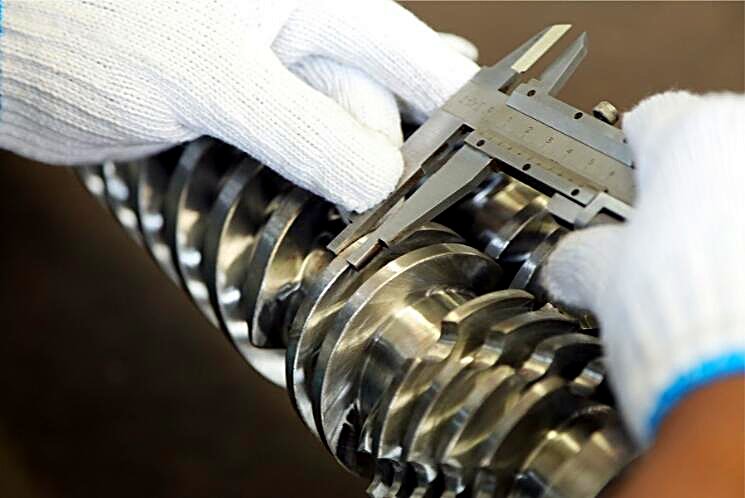
Clearance verification, rust protection, wooden case packing.
Tread, sidewall, apex and inner liner extrusion.
Industrial hose, automotive hose and rubber tube.
Automotive weatherstrip, door seal and window channel.
Rubber-insulated and sheathed cable.
General extruded rubber profile and section.
Belt cover and skim compound extrusion.
Silicone tube, profile and medical-grade extrusion.
Cold-feed extruders for door seals, hoses and trims.
Rubber barrels for continuous cable insulation and sheathing lines.
“Scorching was costing us material every week. The new cold-feed geometry runs noticeably cooler.”
Process EngineerHose manufacturer, Europe“The pin barrel improved dispersion on our filled compound. Product consistency is better.”
Production ManagerRubber profile extruder, Asia“They asked about our compound before quoting rather than just copying dimensions. That was reassuring.”
Plant ManagerSeal manufacturer, North AmericaIt depends on your upstream equipment. If strip comes pre-warmed from a two-roll mill, hot-feed suits; if you feed room-temperature strip directly, cold-feed is the modern standard. Tell us your line configuration and we advise.
A pin barrel has rows of pins protruding through the barrel wall into the compound flow, improving distributive mixing and temperature uniformity. It is useful for compounds that are difficult to homogenise.
Rubber is softened by shear rather than melted, and long residence risks scorching. Short L/D keeps residence time low and temperature controlled.
Yes. Send the drawing, the machine model or the worn set and we machine to the original interface so it drops in without line modification.
Yes, including stainless construction for silicone and hygiene-sensitive applications.
It depends on diameter, length and treatment. The schedule is confirmed together with the quotation.
Send the drawing, machine model or worn sample — we confirm the geometry and quote within one working day.
Tell us the machine model, screw diameter and material you process — we will reply with a matched solution and quotation.
Or write directly to info@xiwangindustry.com · WhatsApp +86-13503734287
Yes, including pin-barrel (transfermix) designs for cold-feed lines. Rubber behaves very differently from thermoplastics, so we build for the viscosity and shear-sensitivity of your compound rather than adapting a plastic screw geometry.
Rubber compounds can be both abrasive and chemically aggressive. We select base steel and surface treatment for the combination — frequently a corrosion-resistant grade under a wear-resistant treatment — instead of treating every rubber job the same.
Yes. Pin holes are machined and indexed to the extruder's arrangement, and the pin bosses are finished to seal against the barrel bore so no material hangs up behind them.
Tell us your machine model, drawing or worn sample — we reply with a matching proposal and quotation within one business day.