Shipment · 22 Oct 2026
PVC punishes high shear and heavy filler. What to specify for a conical twin line - compression, venting, alloy choice and output targets.
PVC degrades if you shear it too hard and it carries calcium carbonate that wears the bore. Getting both right on a PVC pipe line comes down to a few specific decisions before you buy.
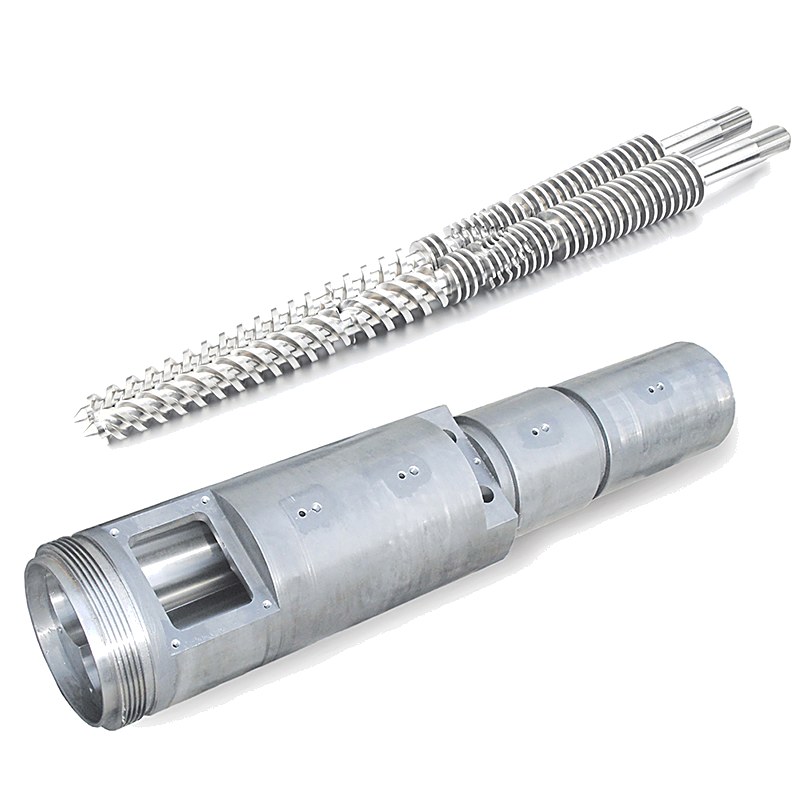
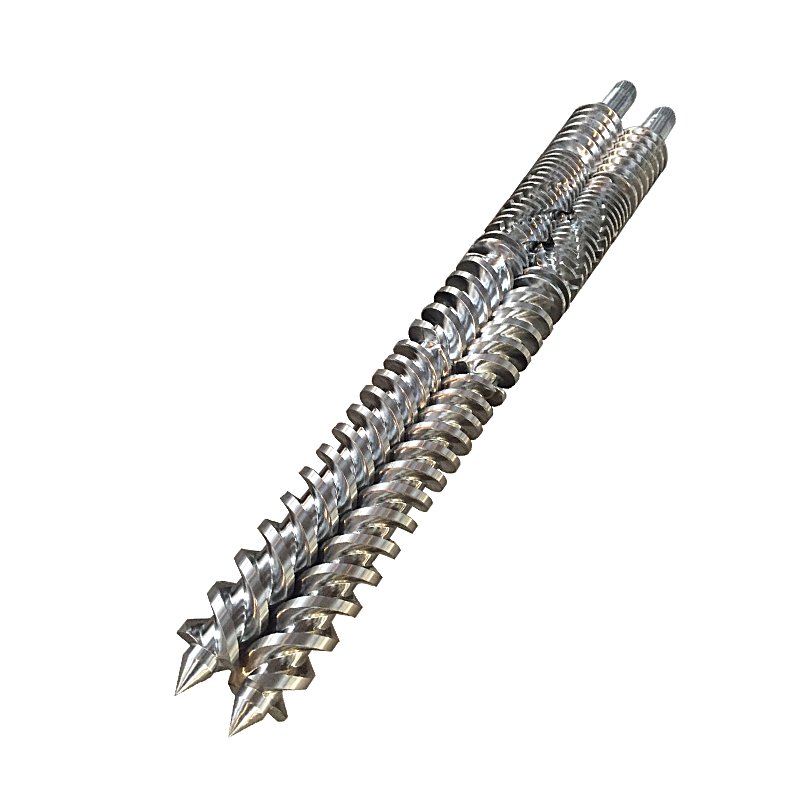
PVC pipe is dominated by counter-rotating conical twins, typically 51/105 up to 110/220 for large diameter pipe. The taper gives a large feed area and a small discharge end, which suits a heat-sensitive material. Parallel twins appear more in compounding than in pipe.
PVC needs a low compression ratio and a smooth, short compression zone. The screw should plasticate without hot spots: once the material starts to degrade locally, the whole pipe discolours and the problem looks like a formulation issue rather than a hardware one.
If you run regrind or recycled PVC, a vented barrel removes moisture and volatiles before the metering zone. Output targets should be quoted against your die; we size the metering depth to the head pressure you actually run, not to a catalogue figure.
Machine model, screw diameter and conical size (for example 65/132), pipe range, filler percentage and whether you use regrind. A photo of the nameplate plus the old parts is enough if there is no drawing.
Send your machine model, drawing or worn sample — we reply with a matching proposal and quotation within one business day.